
How to Choose an 18k Gold Rope Bracelet
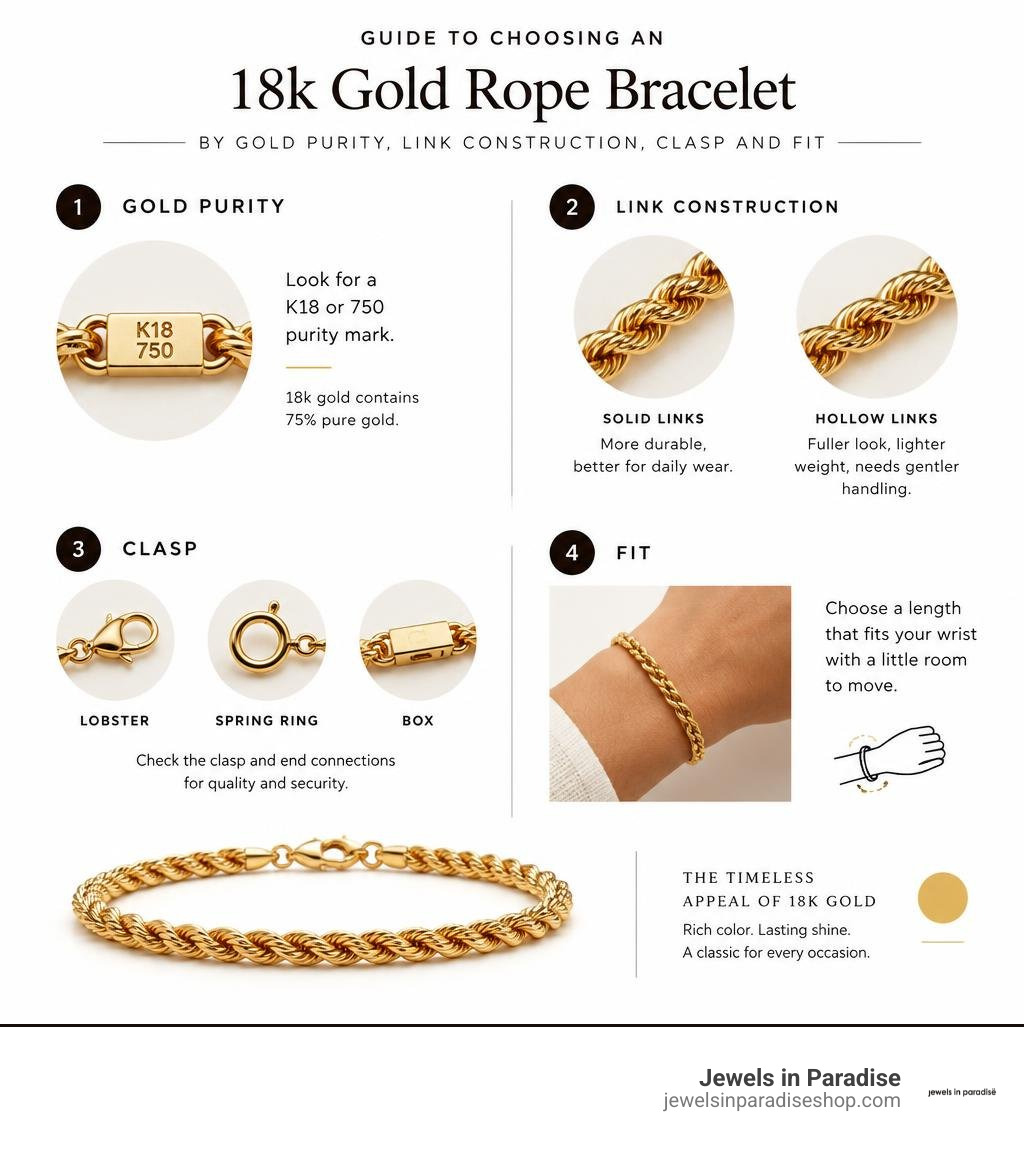
For an 18k gold rope bracelet that looks rich and holds up to regular wear, start with three checks: look for a K18 or 750 purity mark, ask whether the links are solid or hollow, and inspect the clasp and end connections. Solid links generally resist dents better; hollow links offer a fuller look at a lighter weight but need gentler handling. Choose a length that fits your wrist with a little room to move.
An 18k bracelet contains 75% gold. It typically has a richer yellow color than lower-karat yellow gold, while its added metals make it more practical to wear than pure 24k gold.
I'm Rhea Wadhwani, Head of Sales Operations at Jewels in Paradise, where I've worked in luxury jewelry sourcing and retail since 2015. That experience shapes how I assess an 18k gold rope bracelet for purity, construction, and fit.
Anatomy and Appeal of the 18k Gold Rope Bracelet
A classic rope chain is one of the most recognizable and enduring patterns in fine jewelry. Unlike standard cable or curb chains, which consist of simple oval loops linked end-to-end, a rope chain features a series of small, curved rings woven together in a repeating spiral. This geometry creates the visual appearance of an actual twisted cord made entirely of precious metal.
The physical construction of a rope chain allows it to catch light from every angle. As the bracelet moves on your wrist, each curved segment reflects ambient illumination, producing a continuous shimmer. Many designs enhance this effect with diamond-cut facets—tiny, precise incisions cut into the outer surface of the links using specialized diamond-tipped tools. These facets act like microscopic mirrors, giving the gold an unmistakable radiance that outshines flatter chain profiles like Figaro or paperclip chains.
Solid vs. Hollow Construction
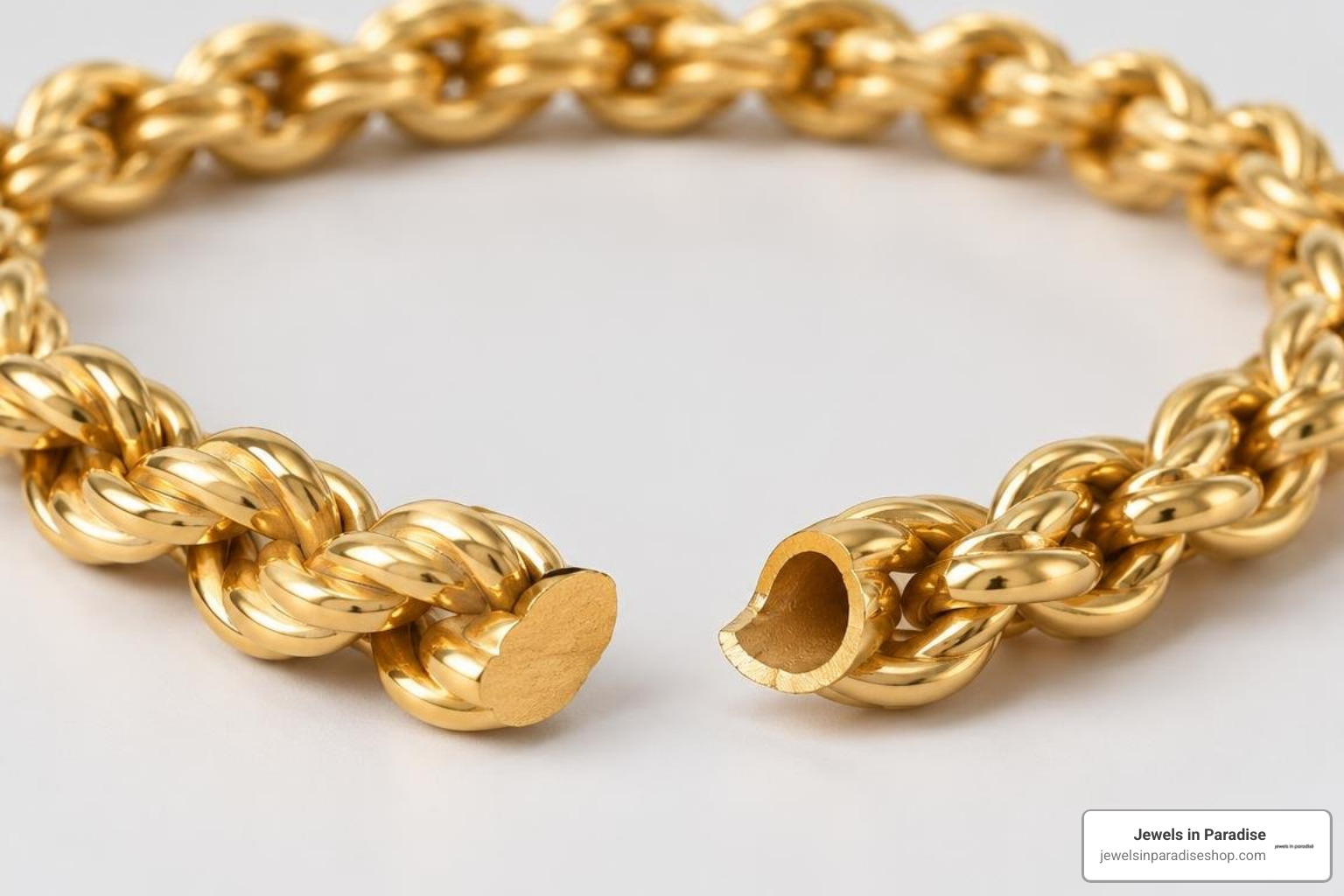
When shopping for rope bracelets, you will encounter two primary manufacturing methods: solid and hollow (often referred to in high-precision Japanese manufacturing as pipe or "midair" construction). Understanding the difference helps you select the right piece for your lifestyle and budget.
- Solid Rope Chains: In a solid rope chain, every interlocking ring is solid 18k gold through to its core. These pieces feel substantial, offering the reassuring heft associated with heirloom luxury. Solid construction provides superior resistance to crushing, denting, and bending. If you lead an active lifestyle or plan to wear your bracelet around the clock, solid links provide the highest level of structural durability.
- Hollow Rope Chains: Hollow rope chains use advanced tubing technology where each link is crafted with an open center. This allows jewelers to create a visually broad chain—such as a 2.6mm or 3mm profile—using significantly less metal. For example, a 16cm hollow bracelet in a 2.6mm width might weigh around 1.2 grams, while a 3mm version weighs roughly 1.82 grams. The primary advantage is effortless, lightweight comfort combined with accessible luxury pricing. However, hollow links require gentle handling, as severe pressure or catching the chain on clothing can crush the internal void, making repairs challenging.
Fasteners and Hardware Security
A rope bracelet is only as dependable as the hardware holding it to your wrist. Because 18k gold is a high-value material, clasp selection and end-cap construction are critical aspects of overall quality.
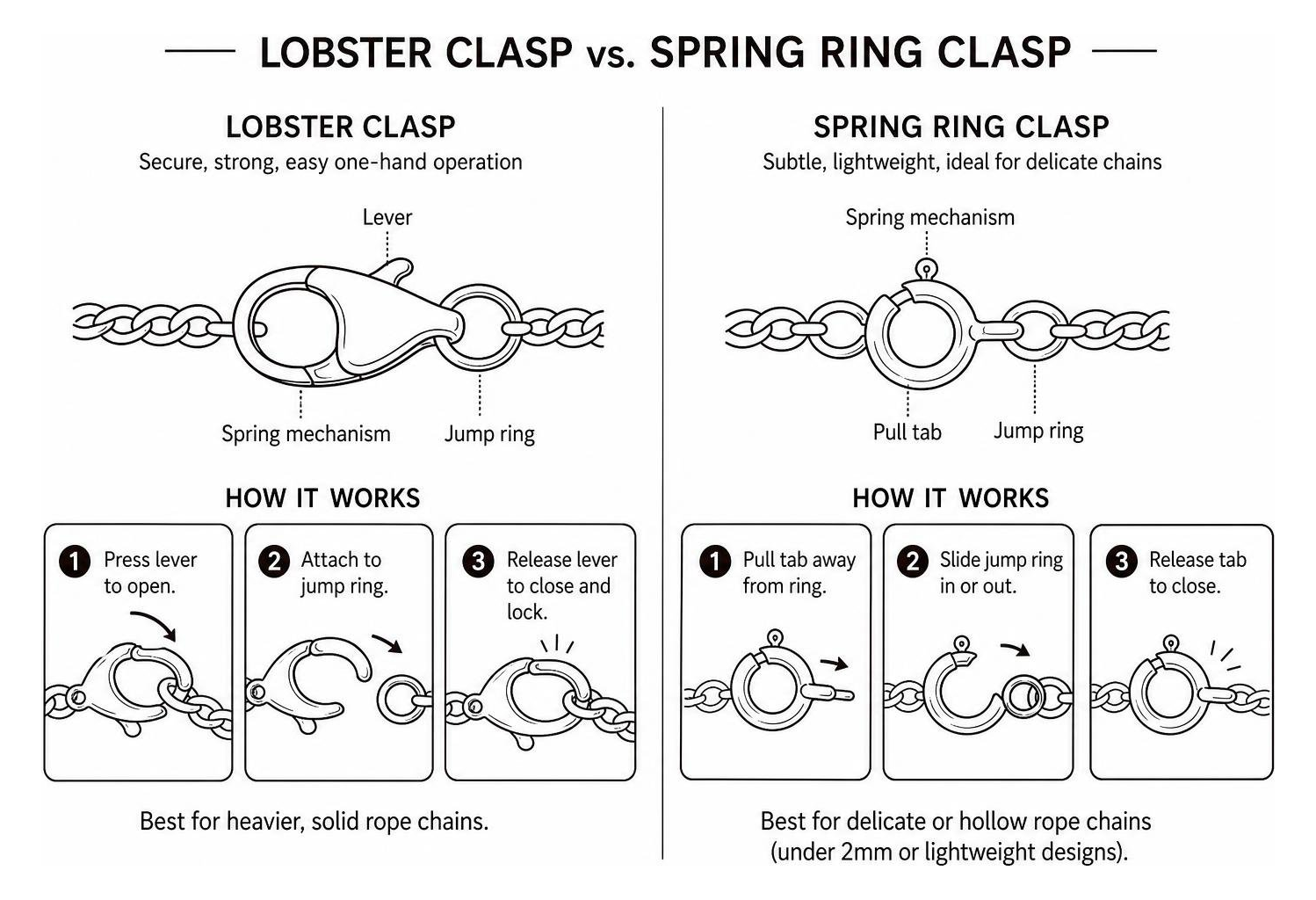
- Lobster Clasps: Featuring an internal steel spring mechanism shaped like a lobster claw, this fastener offers excellent tensile strength and security. It is simple to operate with one hand and is the preferred choice for heavier, solid rope chains.
- Spring Ring Clasps: Often chosen for delicate or hollow bracelets (under 2mm or lightweight multi-strand pieces), spring rings provide a subtle, minimalist profile that blends seamlessly with the chain links. They must be manufactured with precise tolerances to prevent snagging.
- End Caps and Solder Joints: High-grade rope chains feature cleanly soldered end caps that securely anchor the intertwined links before connecting to the jump ring and clasp. Inspect these joints carefully; smooth, seamless solder seams prevent individual rope strands from fraying over time.
18K Gold vs. Lower Karat Alloys: Purity, Durability, and Radiance
Gold purity is measured in karats, with 24 karats representing 100% pure elemental gold. Pure gold is naturally soft and malleable, making it impractical for intricate, interlocking chain structures. To achieve the perfect balance of strength, longevity, and rich coloration, fine jewelry relies on specialized alloy blends.
An 18k gold alloy consists of 75% pure gold combined with 25% complementary metals such as copper, silver, or zinc (frequently stamped as 750 to denote 750 parts per thousand). This composition provides distinct advantages over lower-karat options like 14k (58.3% gold) or 10k (41.7% gold):
- Warm, Saturated Radiance: Pure gold possesses a deep, glowing yellow color. Because 18k contains three-quarters pure gold, it retains that unmistakable warmth. Lower alloys contain higher proportions of base metals, which can leave 10k and 14k yellow gold looking pale or slightly greenish by comparison.
- Hypoallergenic Comfort: Skin sensitivity and contact dermatitis are often caused by base metals—particularly nickel—mixed into lower-karat jewelry. With 75% noble gold content, 18k gold is inherently hypoallergenic and significantly less likely to cause irritation or turn your skin green.
- Superior Tarnish and Corrosion Resistance: Pure gold does not oxidize, rust, or tarnish. The high concentration of gold in 18k alloys protects your piece from environmental corrosion caused by sweat, moisture, and ambient air, ensuring it maintains its luster for generations.
- Long-Term Value Retention: An 18k gold bracelet holds substantially higher intrinsic precious-metal value than pieces crafted from lower purities.
| Attribute | 18K Gold (750) | 14K Gold (585) | 10K Gold (417) |
|---|---|---|---|
| Pure Gold Content | 75.0% | 58.3% | 41.7% |
| Color Depth | Deep, rich warm gold | Moderate, lighter yellow | Muted, pale yellow |
| Tarnish Resistance | Exceptional | High | Moderate (can oxidize over time) |
| Hypoallergenic Rating | Excellent (safe for sensitive skin) | Good | Variable (higher base metal content) |
| Intrinsic Value | High precious metal weight | Moderate | Lower |
For detailed global standards on karatage, alloy properties, and international marking criteria, the Gold Jewellery: Colour, Carat & Purity | World Gold Council reference provides extensive metallurgical data.
How to Authenticate and Care for Your 18k Gold Rope Bracelet
Protecting your fine jewelry requires knowing how to verify its authenticity and maintain its brilliance at home.
- Examine the Hallmarks: Genuine 18k gold pieces feature clear, standardized stamps. Look for 18K, K18, or the European standard 750 engraved on the clasp or end tab. In Japanese fine jewelry, "K18" is standard notation denoting authentic 75% gold purity.
- Routine Cleaning: Keep your rope chain clean by soaking it in a bowl of warm water mixed with a few drops of mild dish soap. Use an extra-soft toothbrush to gently remove oils and dust from between the woven links, rinse thoroughly with fresh water, and pat dry using a microfiber cloth.
- Storage and Handling: Always fasten the clasp before storing your rope bracelet flat in a fabric-lined jewelry box or individual pouch. Storing chains unclasped can lead to tight knots that strain the delicate links.
Key Styles and Design Variations for Rope Chains
Rope chains offer remarkable design versatility, transitioning effortlessly between understated daytime minimalism and layered evening elegance.
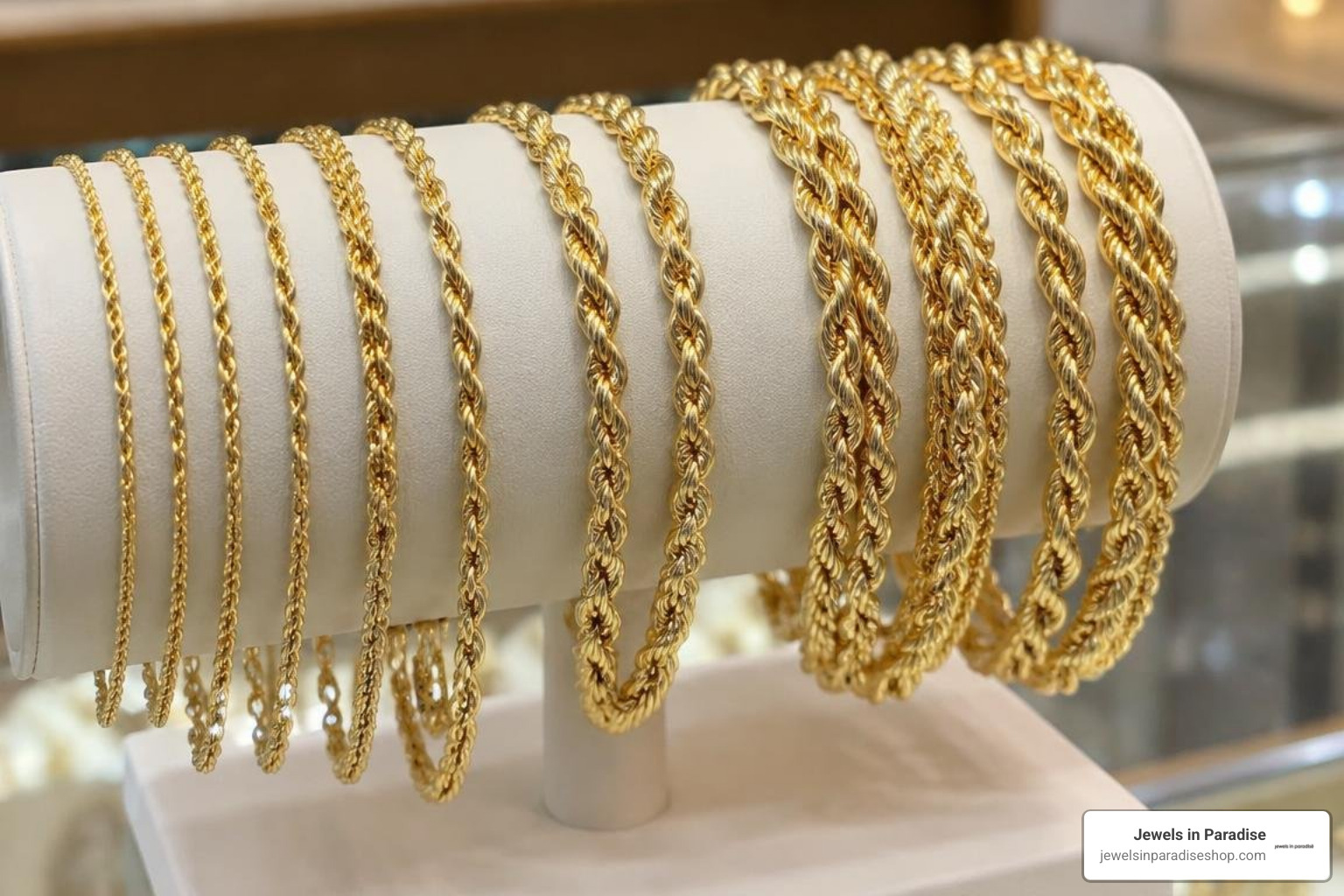
- Classic Single-Strand: The foundational staple. A clean single rope strand creates a continuous ribbon of gold that stands out on its own or pairs cleanly alongside a luxury watch.
- Double-Strand Configurations: By joining two parallel rope chains at a single clasp (such as a dual 2mm layout weighing around 1.77g), you achieve the visual texture of a curated stack with the convenience of a single secure closure.
- Diamond-Cut Variations: Link edges are faceted to maximize sparkle, delivering a glittering aesthetic that mimics the light play of pavé diamonds without stones.
- Anklet Conversions: The fluidity of the rope weave makes it an exceptional choice for ankle jewelry. Extended lengths (typically 22cm to 25cm) drape naturally without pinching or binding.
Selecting the Ideal 18k Gold Rope Bracelet Width and Length
Finding the correct proportions ensures your bracelet feels balanced and comfortable throughout the day.
-
Choosing Width:
- 2.0mm to 2.6mm: Delicate and subtle. Ideal for daily wear, small wrists, or stacking with other fine chain styles.
- 3.0mm to 4.0mm: A noticeable statement width that showcases the spiral rope geometry clearly when worn alone.
-
Determining Length:
- Measure your wrist circumference just above the wrist bone using a flexible measuring tape or strip of paper.
- Add 1.0cm to 1.5cm (approx. 0.5 inches) of allowance to your measurement. Because rope chains are three-dimensional tubes rather than flat ribbons, they occupy physical volume on the wrist. A 16cm (6.3-inch) chain fits a close, petite wrist, while selectable lengths allow you to achieve the exact drape you prefer.
Frequently Asked Questions About 18K Gold Rope Chains
How does an 18K gold rope bracelet compare to 14K for everyday wear?
While 14K gold is marginally harder due to its higher base metal ratio, 18K gold offers more than enough durability for regular daily wear while delivering a visibly richer color, superior tarnish resistance, and safer wear for sensitive skin.
Can a hollow 18K gold rope chain be repaired if it breaks?
Yes, experienced master jewelers can solder broken links on hollow chains using laser welding. However, crushed or deeply dented hollow links cannot simply be popped back into shape, which is why hollow pieces require mindful handling.
What does the K18 engraving mean on gold jewelry?
The K18 stamp is an internationally recognized hallmark—widely used by Japanese and European jewelers—certifying that the item is composed of 18-karat gold (75% pure gold alloyed with 25% other metals).
Conclusion
An 18k gold rope bracelet delivers an exceptional combination of sculptural beauty, fluid comfort, and lasting intrinsic value. Its interlocking spiral design captures light from every perspective, making it a foundational staple in any refined jewelry collection.
At Jewels in Paradise, we take pride in curating ethically sourced, rare handcrafted jewelry backed by comprehensive care, personalized packaging, and fully insured door-to-door delivery. Whether you are searching for an understated everyday chain or an eye-catching statement piece, browse our curated luxury styling guides to find the perfect addition to your personal aesthetic.